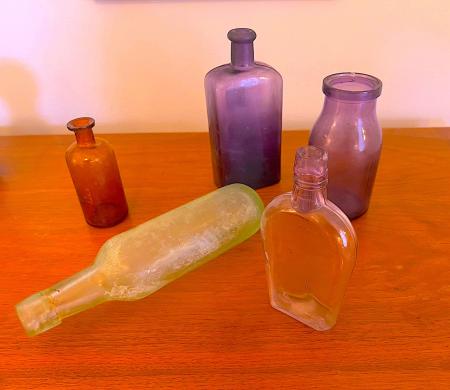
$90 for the collection.
Some background on soda bottles and sun-purpled desert glass:
THE STORY OF PURPLE GLASS AND “TORPEDO BOTTLES”
Purple glass, which is often referred to as desert glass or sun colored glass has been a popular collectors item for many years. Most pieces were originally clear pattern glass or pressed glass and date prior to 1914.
In the manufacturers in the manufacture of glass, the iron in sand caused glass pieces to become a characteristic aqua or green color. Around 1880 manganese was added to the process in an attempt to produce a clear crystal color. Manganese ions combine chemically with iron ions when exposed to the ultraviolet rays of the sun over time, creating the beautiful amethyst color scene today. This manganese process was used until 1914 when Germany cut off the supply of manganese to the United States during World War I.
The depth of color change in individual pieces is determined by the amount of manganese used in the batch of glass in a given run; thus, some pieces attain a deep purple color while others are a lighter amethyst color. Flaking and chipping are common and purple glass. Within reason these imperfection should not detract from the value of an item in addition, small flaws created in old manufacturing processes, do not take away from the value of the item, but add to its character and stand as a testament to its antiquity.
Nineteenth-century round-bottom ginger ale and soda bottles, often called “torpedo bottles,” were designed to lie on their sides to keep cork stoppers moist, preventing them from drying out, shrinking, and allowing carbonation to escape. This design prevented the corks from popping out and ensured the drink remained carbonated.
Key reasons for the round bottom design include:
* Preventing Dry Corks: By keeping the bottle on its side, the liquid kept the cork moist, preventing it from shrinking or rotting, which would allow the pressure to pop the cork and lose the carbonation.
* Storage and Transport: The rounded base made it impossible to stand the bottle upright, forcing retailers to lay them on their sides.
* “Ballast” Function: Many of these bottles were produced in Britain and Ireland, and the round shape allowed them to be stored easily in the holds of ships as ballast to balance the vessel.
* Pressure Management: The design was often used for highly carbonated, in-bottle fermented, or soda drinks, as the round shape helped distribute the intense pressure, often combined with a wired-down cork.
These “round-bottom sodas” or “torpedo bottles” were popular from the 1870s until roughly the 1910s, eventually falling out of favor with the invention of the crown-style cap, which allowed bottles to stand upright.
Thank you, BBQ!