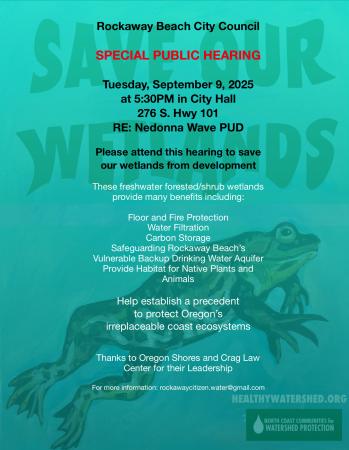
The hearing, scheduled for Tuesday, September 9 at 5:30 p.m. at Rockaway Beach City Hall (276 S. Highway 101), will address the Nedonna Wave Planned Unit Development application following a remand by the Oregon Land Use Board of Appeals (LUBA). On one side, developers Nedonna Development LLC seek approval for the project’s second phase, while opponents, including NCCWP and the Oregon Shores Conservation Coalition (represented by the Crag Law Center), argue it would destroy ecologically sensitive areas.
How to Provide Public Comment:
Written Comments may be submitted electronically by sending an email no later than 48 hours prior to the meeting to CityHall@Corb.us
In Person – sign-up sheet and instructions will be located on the table ouside of the meeting room.
Virtually on Zoom – use the “raise hand” feature when the Mayor announces it is time to do so.
These freshwater forested and shrub wetlands provide essential benefits, including flood and fire protection, water filtration, carbon storage, and habitat for native plants and animals. They also filter contaminants to protect the shallow backup aquifer that supplements Rockaway Beach’s primary source of drinking water (Jetty Creek) in late summer when rainfall and streamflow are lowest.
Nedonna Beach is a sandy littoral wetland, modified by construction of the 1918 Nehalem River jetty and naturally accreted over decades. Bordered by wetlands on three sides and the ocean on the fourth, the aquifer serves as a DEQ-defined drinking water source, but with about 70% of local homes using septic systems and with damage from past draining, filling, and development, further development of the wetlands raises serious questions about the future safety and adequacy of the aquifer.
NCCWP, a nonprofit advocating for an end to logging and pesticide use in community drinking water sources regardless of ownership, works to ensure safe drinking water and clean air as public trust rights.
For more information or to get involved, visit www.healthywatershed.org or www.facebook.com/NCCWATERSHEDPROTECTION. Contact rockawaycitizen.water@gmail.com to learn more.